Introduction
Over a recent five-year period, the U.S. Consumer Product Safety Commission logged at least 25,000 fire or overheating incidents tied to lithium-ion batteries, across more than 400 different consumer products. The FAA verifies more lithium battery incidents on aircraft each year than the last, a record 89 in the most recent count. In New York City alone, fires traced to lithium-ion batteries rose more than 800% in just five years, from 30 in 2019 to 277 in 2024. The batteries powering modern products are failing in the field, and the numbers are climbing.
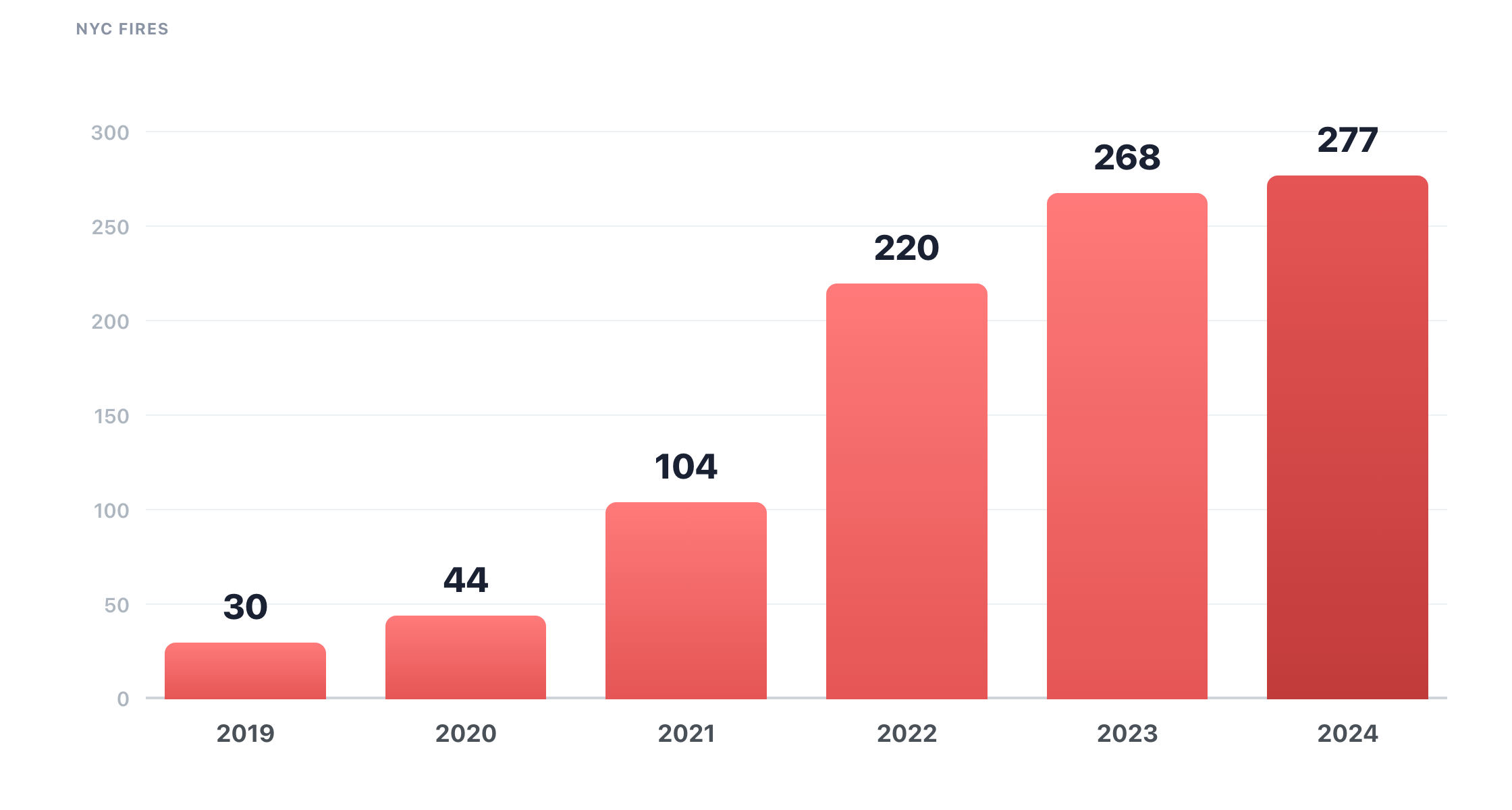 New York City lithium-ion battery fires reported by the FDNY, 2019–2024. Source: FDNY / City of New York; NFPA.
This is the dark side of electrification. As batteries have gone from a niche component to something inside nearly every product category at once, battery safety needs to be at the forefront of company strategy. For the companies buying cells and building them into products, it is a whole new area of risk. The cell is usually the cheapest part of the bill of materials — and the most dangerous. One bad unit can scrap the product built around it, fill a warranty queue, or, at the far end, start the fire. Casely recalled power banks in 2025 after their cells overheated and ignited, with one death reported. Anker, one of the most trusted names in the category, recalled more than a million power banks the same year over fire and burn reports. Rad Power e-bike batteries drew a CPSC fire warning over 31 reported fires and roughly $734,500 in property damage, even after the cells passed third-party retests. And when the bill came due, it was Rad Power — the e-bike company that bought the cells and built them into bikes, not whoever manufactured them — that filed for bankruptcy and refused a recall, leaving owners holding batteries no one would replace. Unit Pack Power sold e-bike batteries that were never certified to the applicable UL standard at all.
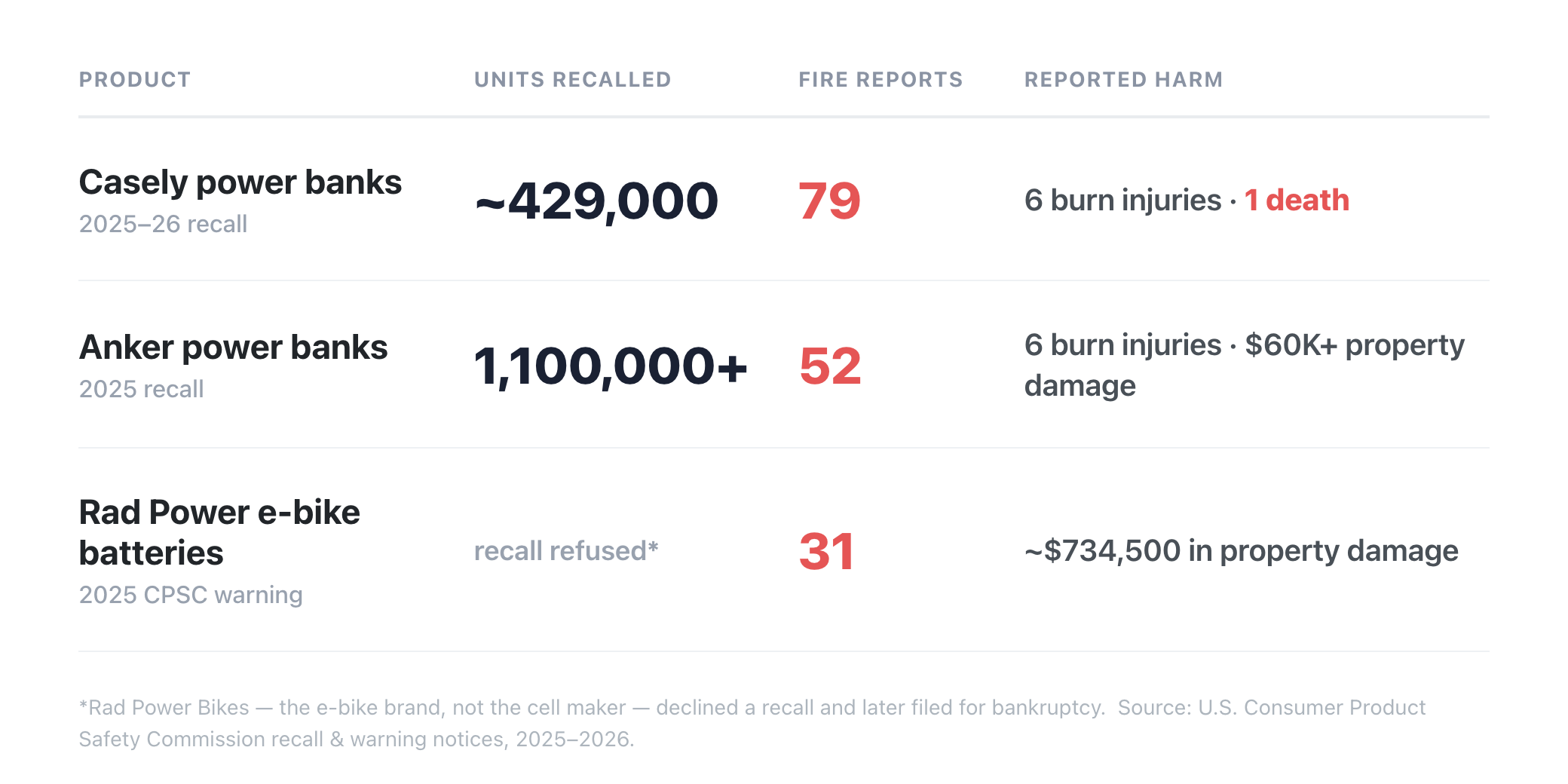
None of these companies set out to ship something unsafe. They bought cells that looked good on paper, graded "A-grade," shipped with a datasheet, carrying the right certifications, and they did the reasonable thing: they trusted that quality was handled before the cells ever reached them. But a certificate proves a design passed a test once, in a lab; it says nothing about the cells in this week's box, or whether they fit what you are about to ask of them. Most of the time, that trust holds. The problem is the times it doesn't, and the only way to catch those is to check the cells yourself when they arrive. That is what incoming quality control is for, and the rest of this guide is about how to do it well. We start with why it matters.
What you're really checking for
So why check cells that already passed the supplier and carry the right certifications? Because the datasheet answers a different question than yours. Incoming QC is really two checks.
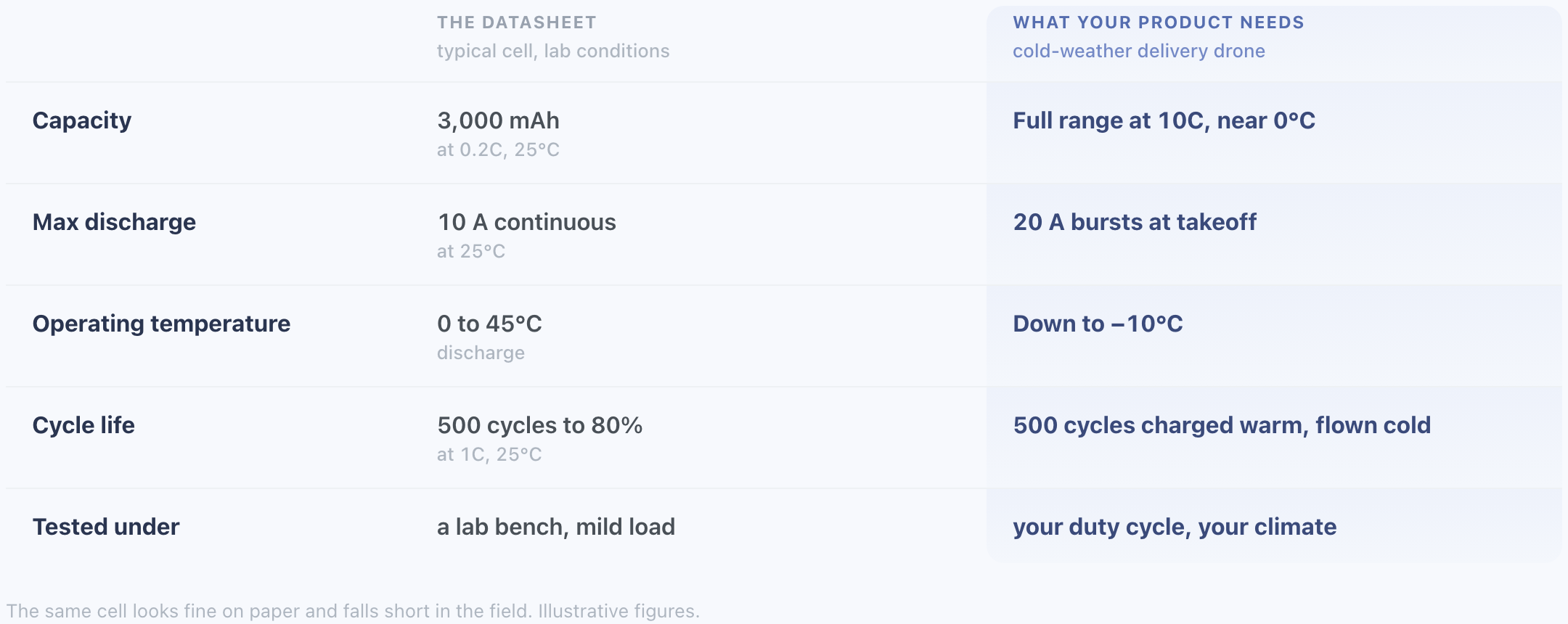
A genuinely good cell can still be wrong for your product. The same cell that shines in a stationary backup unit gets pushed past its limits in a drone pulling hard current in cold air, or a medical device that must hold a precise charge for years. Off-the-shelf cells are specified for an average application, not yours, so you have to test under the conditions your product actually imposes.
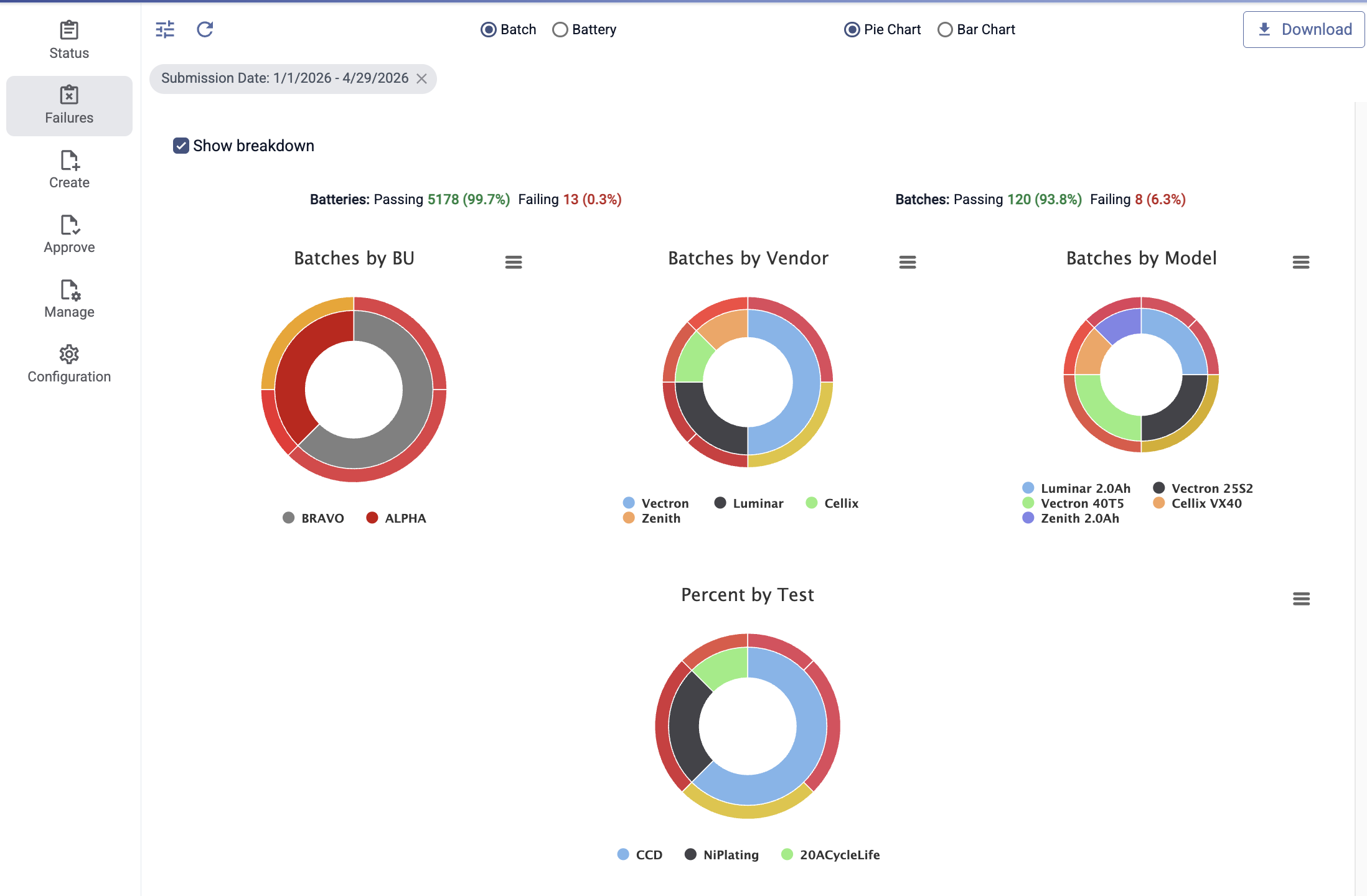
Cells with the same part number and grade still differ in capacity, resistance, self-discharge, and the odds of a hidden defect, and the spread only widens across suppliers. A process drift, a contamination event, or a new material lot can quietly change a whole batch, so every shipment has to be verified.
So what is incoming quality control?
Incoming quality control is the set of tests and decisions you run on cells when they arrive, before they go into your product. It answers one question for every shipment: do these specific cells meet the bar my application requires? Done well, it turns a leap of faith into a measurement, and a paper trail you can stand behind.
There is a catch, and it is the one that makes quality control hard. The tests that tell you the most — cycle life, abuse response — take weeks and use up the cells they run on, and you are not buying a handful of cells, you are buying thousands or millions. You cannot test them all. So incoming QC is really a sampling problem: test few enough cells to keep production moving, and enough of the right ones to trust the shipment they came from.
Getting that balance right is the work, and this series walks through it end to end: choosing a supplier and a cell that fit your application, deciding what to actually measure on a shipment, designing test procedures that are rigorous without grinding production to a halt, and managing the risk of shipping and storing cells once they pass. This first article has the simplest job: making the case that the work is worth doing at all.
Every company on the recall lists above believed their cells were fine. The ones that stay off those lists are the ones that stopped trusting and started measuring. Next, we start where the work really begins: choosing what to buy.
Micantis runs the whole incoming QC loop for you: automated cell data capture from any cycler, spec-based pass/fail, and cycle life predictions backed by a money-back accuracy guarantee.
See how incoming QC works or schedule a demo.